_______________________________________________________________________________________
Showing posts with label General. Show all posts
The Secret of Success Or: Enlightenment under the Bodhi Tree of Exams
Truth of exams: The evaluation modules come in various avatars like exams, internal tests, practical, viva voce, group discussions, personality tests, aptitude tests and so on. Each form expects something from you; each of them has broadly different goals. Understand what the exam expects from you. Some of them, like the optional paper of the civil services exams, require in-depth understanding of the subject, while a few like social media marketing demand a degree of creativity too. Some of them test your intelligence, while the likes of official language papers in government training academies may test your patience. You also have to understand the importance of the exam to you. Is it a so-called life or death paper or just a technical formality that needs to ticked? Bonus: A good place to know more about an exam is the question bank of the past 8–10 years.
Truth of the path:
An Antiviral Video ... of Courage, Faith, Compassion
In the first week of May, a few of us (civil service batchmates) got together to revive our bond during these testing times of the global corona pandemic. Many of us were already in 24*7 corona prevention and relief duty serving as police chiefs or collectors of districts and other officers who kept the system running, but still we wanted to do more - in our personal capacities too. So we hit upon a way to bond again as well spread some positivity. It was May 9, 2020. A Saturday.
The idea was a to make a video with a universal message; a video that banked on the diversity of our nation. It is said India almost adds an Australia to its population every year. It is not only about the sheer number, but also the variety our country holds. It is simply mind boggling. We felt it was very necessary to underscore our unity amidst all diversity; highlight the need to get together during the crisis. With the beautiful linguistic diversity of our country as the base, we weaved our message. The Constitution of India, in its Eighth Schedule, recognises 22 languages as the official languages. Fortunately we had access to the speakers of all these languages from the civil service fraternity. And most of them readily agreed to be a part of our humble effort in spreading hope.
For the generation of the 80s Mile sur mera tumhara... is evergreen. I still do not understand most part of this multi-lingual medley that came up in Doordarshan, but I love it as it has a line or two in Tamil, my mother tongue. I am sure many others feel the same way about the song; get the same inner connect with the song. But we wanted the message to be so direct, simple and hard. We did not have the luxury of time or the talent pool required to create a musical. And that brought us the idea of spreading just three words of positivity in all these languages. Positivity cannot cure virus - but it may help us fight better. During any crisis time what we need is - the courage to fight it out, the faith in our cause and compassion in our hearts to bind all of us together.
In a matter of two days, my Whatsapp was filled with videos from the speakers of all the 22 languages. As requested, they had given the best translation of the three words 'Courage - Faith - Compassion' in their languages, in the form of video clips shot with mobiles, like personal video messages. A few of them were accommodative enough to reshoot and resend their clips with more variations in terms of the translation or with better voice clarity. It did not feel like all of us were working from different corners of the country, from places as geographically apart as Assam, Kashmir, Gujarat and Kerala. There was a speaker from Myanmar too. But more than technology, what cemented us was the deeper purpose of our efforts. Some of the speakers sent their videos in spite of their back breaking office work, which again was about containing the virus and serving the people.
After spending the next 4-5 days in putting the pieces together and creating a story of hope out of it, on 16 May, exactly a week since we got together, we launched the video. A lot of friends supported us to the hilt in making the video get wider reach. When we began, we had a simple goal in our minds, a simple dream in our hearts - that our day is made if someone, somewhere gained hope and good vibes by watching our video. We worked together, without any lofty aspirations. But surprisingly, by the afternoon, the video had gone viral.
Source: Guideposts
By the evening, the video was in the MyGov Corona Hub FB page of the Government of India; and by the late hours of the same day, in just the same page the video had been watched more than 1.8 million times. As I type, the number stands at 2.6 million. The video had also been made a part of the Aarogya Setu app of the Government of India. The app, which has close to 115 million downloads, is at the technological forefront of the Indian government's effort to fight the virus.
A few friends strongly felt a video could not cure the virus. They are right. But their presumptions about our goal were misplaced. The plain truth is there is no silver bullet here, we just have to keep taking baby steps together in our own possible ways. It may be as simple as feeding crows or stray dogs; it may be as artistic as creating a dance album that spreads the spirit of humanity worldover; it may be as demanding as arranging transportation and food for the stranded millions; it may be as skilled as toiling in the labs to develop a vaccine. But this was our humble way. You can find your own ways to unite, to come together by whatever means - little or big, perfect or imperfect. Let us fight together; and win together. Little drops of water actually make up the vast ocean...
https://youtu.be/pLKRLAQM-W8
#IndiaFightsCorona #courage #faith #compassion #fighttogether #wintogether
https://youtu.be/pLKRLAQM-W8
#IndiaFightsCorona #courage #faith #compassion #fighttogether #wintogether
Vipassana Meditation for Dummies
The last things first. For those of you who know that Vipassana meditation course has got something to do with observing ‘noble silence’ (basically, keeping quiet) for ten days straight — do not panic. At the end of the program your voice box and your capacity to generate sounds will still be in tact. For those who do not know anything about Vipassana — the next five minutes will deliver you quick enlightenment.
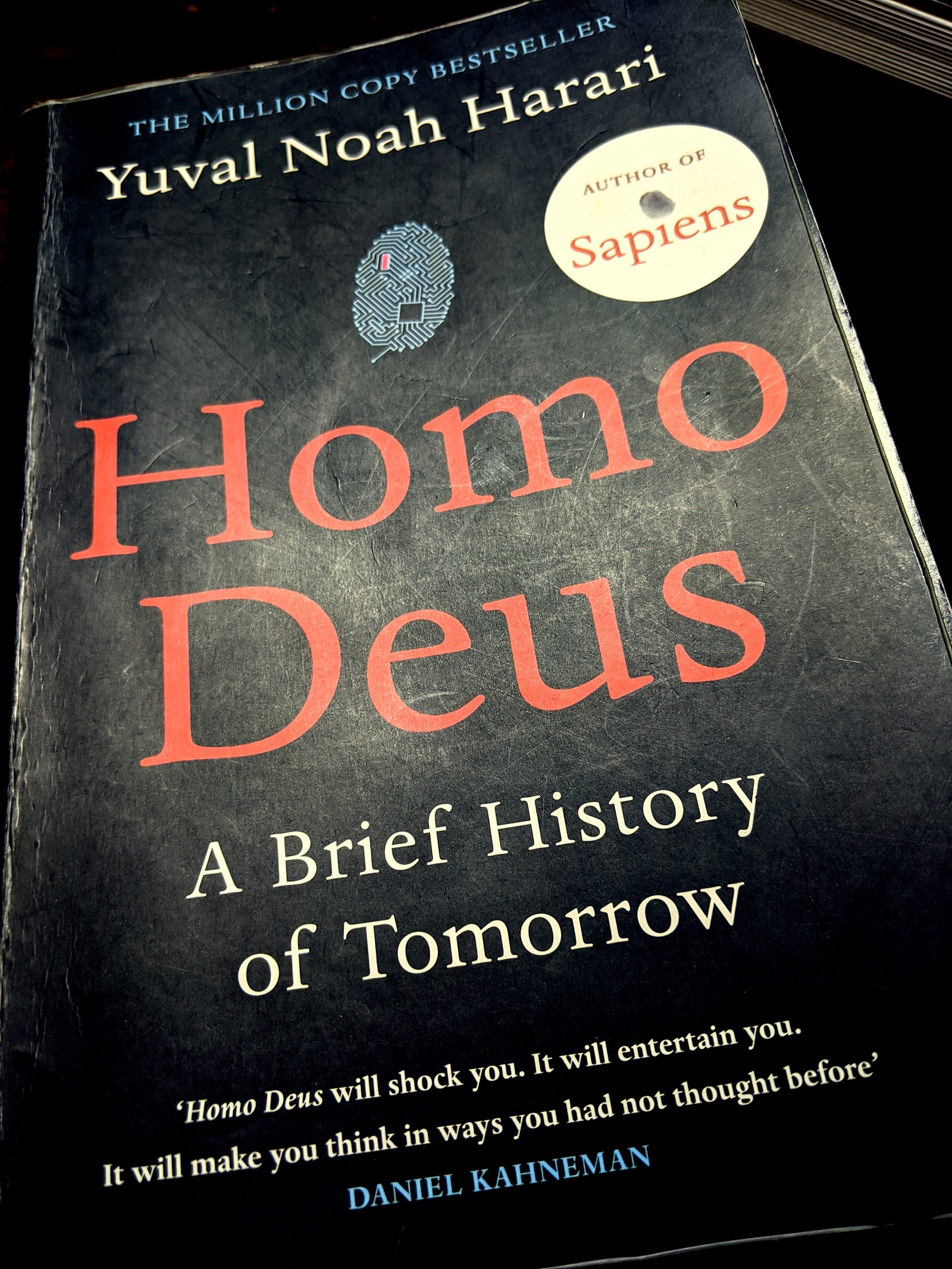
Vipassana is supposedly an old Indian meditation technique that was rediscovered and spread by Gautama, the Buddha, some 25 centuries ago; and more recently popularised by the superstar author Yuval Noah Harari. I had heard the term in the early years of the third millennium, in the year 2005. A friend of mine had completed a program around that time. I remembered only the very basic rule that you were not supposed to talk during the 10-day program. By the way, a 60-day course is also on the offer.

But not speaking was the smallest of the problems I had to tackle during my course last month. In the evening of the Day-1 of the course, you had to deposit all your cellphones at the office. In the initial few minutes without the mobile you really feel like, yes, as if you have lost a little but vital part of your body. But soon you get used to it, though occasionally your old habit kicks in and you even start searching the room for your mobile. (Then you smile.)
In fact, I did not really miss talking as much as I missed the mere holding of my mobile. The cool feel of the glass back…
A typical day unfolds with a wake up call at 4 AM and ends by 9:30 PM. An earth-shattering alteration of the sleep cycle for most of us. Till then I had seen many 4 AMs in my life, but — not by waking up but by simply staying awake. Also have a look at the meal times. It has a better potential to drive you mad. Breakfast at 6:30 AM, lunch from 11:30–12 Noon, and the last things to munch (snacks and tea time) by 5:30 PM. And that is not all. You will notice there is no slot for dinner. That is because you don’t get dinner.
The crazy food-sleep cycle was also not a serious problem for me. And the other rules like no alcohol, no lies, no sexual activities, no non-veg, no smoking, etc. are incidental to ‘noble silence’ and the revamped food-sleep routine. Most of us are good at adapting to situations; and playing the roles we are handed out (Stanford prison experiment, anyone?) Also my illustrious (yes!) academic and professional exposure has made it very easy for me to follow any schedule that an ‘authority’ hands out. I have been a MBA student, management trainee, officer trainee, and above all an obedient kid during my school days.
Every day you end up meditating for some 10-11 hours. In short, the entire day (minus the time for eating, sleeping and resting) is for meditation.
Inside the meditation hall, the instructions from the teacher seem so easy. But the whole game is about following them. For me the most difficult (and amusing) task in the entire program was to fix the mind (and the body) at a place. The meditation opens your eyes too to the very basic question: ‘Who am I?’ Are you the mind? Are you the body? Are you someone/something that tries to control the body and the mind?
I am reminded of the Tamil verses of lyricist Vairamuthu: Udala? uyira? peyara nee? … Moondrum illai seyale nee! Rough English version: Who are you? Are you the body, the soul or the person(name)? None of these. You are your action.
But wait, wait! The defining feature of Vipassana is that the program is not an intellectual entertainment or a spiritual quest. It is neither a philosophical introspection (whatever it means) or a series of motivational sermons. In fact the program is far removed from any of these. The only ‘talking’ that happens daily is the video-taped one hour lecture of Mr.S.N.Goenka (1924–2013), the founder of the organisation.
The program is strictly a boot camp for the mind. You have to work hard, really hard.
Another important aspect of Vipassana program is that the meditation campus is stripped off religious motifs like idols, flags, miracles, candles, etc. Can you believe, there are no framed pictures of even swamijis!

The course is open to people of all religions (there were two Christian nuns in my batch), all races, and also to those who do not believe in the birth-death cycle. But the technique of Vipassana is drawn from the teachings of the Buddha. Therefore little and nice Buddhist stories find themselves ensconced in the daily discourse. These stories make you look forward to the talk at the end of a heavy day. There is also this daily dose of loud speaker chants in Pali language. Also, all the meditation sessions end with Pali shlokas. But such things are surely not enough to brand the program as chants-intensive.
Overall, the course is as secular as rain. Or the sun.
I just met a friend who has paid close to Rs.3,000/- for a three-day meditation camp run by a swamiji. And that just reminds me of this — the entire ten-day Vipassana course does not involve any kind of charges or fares for boarding. The application happens online, and right from then till the last day you are not required to pay anything. This again was based on a Buddhist concept, we were told. After the end of the course you could donate as much as you can, but only if you wished. I’ve always known spiritual sessions and cult gurus as an unfailing path to make some quick money and fan following. So to me this zero-fees policy was something just incredible, awesome.
Actually, everything is free. There are no hidden costs.
This is the golden jubilee year (1969–2019) of Vipassana teaching in India by Mr.S.N.Goenka. The first and the largest centre of Vipassana is in Igatpuri, Maharastra. The organisation (dhamma.org) has presence all over the world, and more than that they have a very simple and functional website.
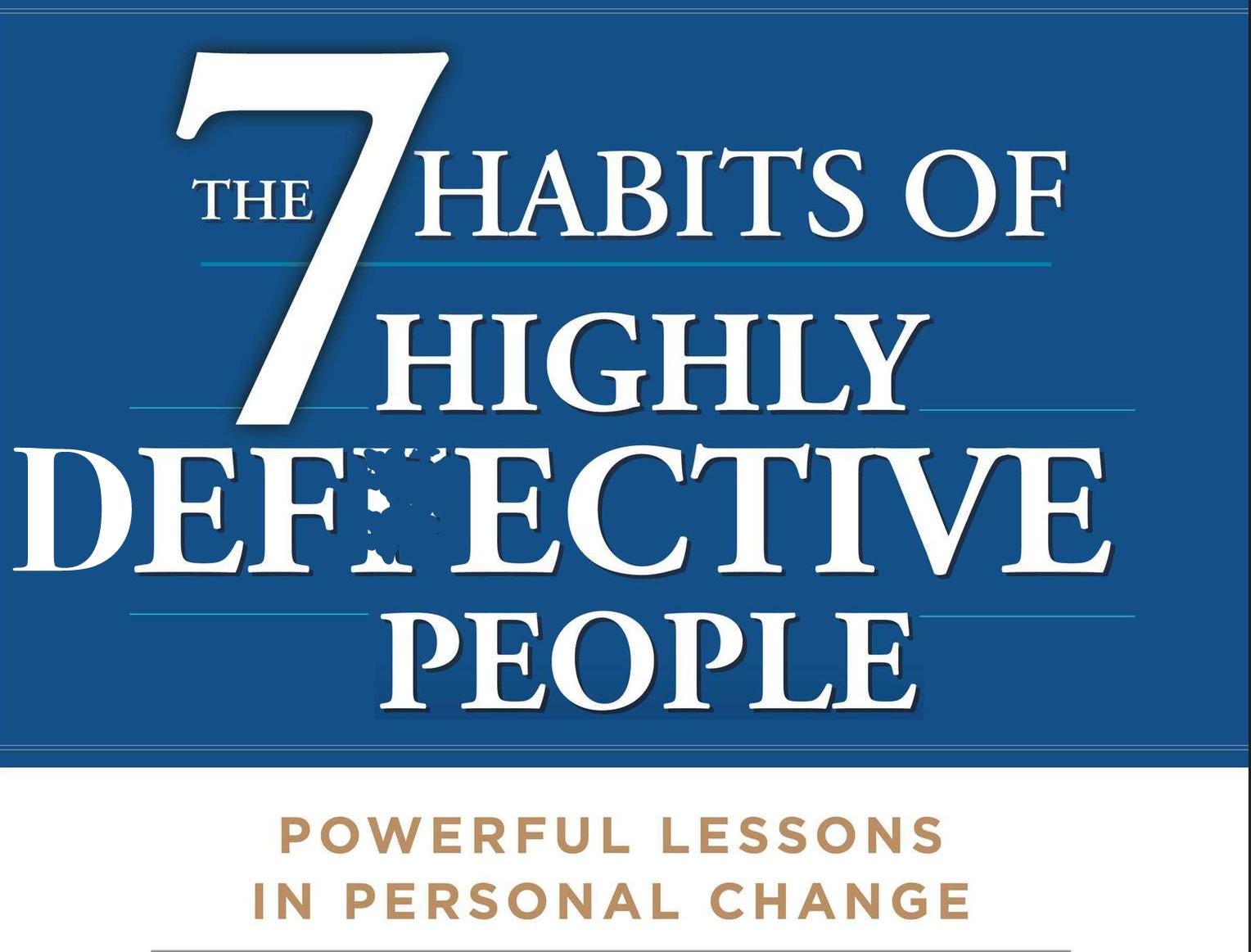
The 7 Habits of Highly Defective People
Habit 1 — Don’t work. Just network. The human mind and soul are designed to follow the path of least resistance. Left to itself the body avoids work. I’m sure you can’t disagree. Self-preservation is a basic nature of all things living as we all have only a limited reserve of energy. Unless we get our daily dose of inspirational quotes or have a Martin Luther King wallpaper we just won’t be able to do anything that needs even an ounce of effort more than what is essential for our survival. Don’t blame yourself for that, it is the way we were all created (evolved?). Accept it. Throw the stuff like ‘No pain, No gain’ into the dirtiest bins and just go with the natural flow of life— don’t waste energy, spend it judiciously. Just get a smartphone and restrict your work to Whatsapp, Twitter, FB and ‘Gram.
Habit 2 — The best decision is no decision. It was like any other day and I was chatting with my auto rickshaw driver as he was wading through the stinking sub-lanes of Bangalore. He was in great distress. The cops were harassing him routinely, for no fault of his. The reason? Kumar (his name) was a normal man a few years ago. But certain situations motivated him to make some ‘life changing’ decisions. And from then on he has been serving the society in a unique way. With the support of a connected NGO, he has been assisting the local cops in giving a dignified funeral for unclaimed bodies in the city. A noble cause, in deed. Down the line he may even get a Magsaysay. Things were smooth and nice until the day when Kumar picked up an orphaned body that had a deep knife injury on its neck. Now his life is entangled with law, criminals and screwed up roads. All of us have the tendency to make sudden ‘life-changing’ decisions and striving to live by them. It may be as simple as deciding to wake up at 4:15 AM daily or saying no to cigarettes as a part of the annual new year celebrations. But wait. Control the urge. Whenever you have the itch to make that life-altering decision — just think of ‘Auto’ Kumar.

Habit 3 — Be safe; Be with the crowd. There was this guy who lost his skull when he tried to bungee jump in some remote area in the Southern hemisphere. He wanted to prove to the world that he was destined for something higher, a greater calling, singular challenges, perhaps. But alas! He is no more. He failed to approach his life from the perspective of evolutionary sociology. As humans, we all have an innate desire to be in groups and to do things that all others do. In fact as the super author Noah Harari has expounded in one of his best sellers, the ability to form huge and complex groups has been the single most defining feature that had set our species apart from chimpanzees, ants and the assorted others. Basically, man is a social animal. It is all for a reason. Respect it. Just imagine if all of us decide that we have superior calling in our lives and start treading our own, different paths. Simple — the human race as a whole will collapse. It may not be the machines but the cockroaches will surely take us over. So just stick with the crowd. Keep your natural instinct in tact. Don’t venture out. At the end of the day it helps to be alive.
Habit 4 — Over-promise; Under-deliver. Imagine you were on a holiday boat ride. Pleasant weather, nice music, breath-taking beauty all around. Suddenly, you hear intense, beast-like cries of a drowning man. Your natural instinct kicks in. You shout, ‘Hang on! I’m getting you a life boat!’ But without any extra effort you pick up a worn out rope lying under your feet and throw it at him. He clasps it for his life. His head above water, he is ecstatic now. He is alive! The old, dirty rope saved him. He jumps into your boat and hugs you like you were his mother. Wait, is he going yell at you, ‘Hey moron! Where is my life boat?’? No, not at all. Human mind is just unmatched in its ability to adapt. A mere promise can make a mind jump with happiness; But a semi-failed promise is not good enough to make a mind get sucked up into the spiralling quagmire of despondency. In easy words, we are better at rationalising things than getting depressed. In the easiest possible terms, it just means — words speak louder than action. Use it to your benefit.
Habit 5— Delegate everything; Claim everything. A fundamental rule in investing is to spread risks. Only an under-developed person puts all his eggs in one basket. Banking on the adage, Habit 5 also takes some strength from Habit 1. It is all inter-connected. Project your energy in as many directions, and on as many people, while actually ensuring that you don’t spend any bit of energy yourself. As a theory it sounds complex but it is easy to practice. Clear? Well, the practical utility of Habit 5 for managers needs no explaining. For the common man you just need to understand that the habit encapsulates so many things. It is like a mammoth tapestry of finely synthesised philosophies of our race. Remember the famous question? Who was the most important person in the field of psychology? Answer — Freud’s mother. Habit 5 works on these lines. It has the potential to cover the entire spectrum of human activity and achievements. Sample this — Just now the news broke that a Kenyan has accomplished the first ever sub two-hour marathon. Let us put to use Habit 5 here. Don’t forget that you too had a role in his record. You stayed away from the race. Pat yourself!
Habit 6— Share, but keep secrets. In most cases, half-baked knowledge is useless and at times, it is fatal too. Remember, how the lion-hearted boy Abhimanyu got killed in the battle of Kurukshetra? He was taught how to break into the enemy defence, but he was clueless about the techniques needed to emerge out of the enemy camp alive. But he was wise enough to know that he did not know enough. But there are millions of us who don’t even know that we don’t know enough. I remember a Japanese (was it Chinese?) proverb — there is no one who knows everything, and there is also no one who knows nothing. All of us are middling beings. Reality. So there is nothing wrong if you hold back secret pieces of learning. Don’t distribute all you know to others. Share knowledge and develop people. But in today’s world where information is no more a rare commodity, you will do good to yourselves if you hold back some vital pieces of the jigsaw. For instance, you could Tweet, ‘Without taking a single breath… Sucssflly spent 143 secs UNDERWATER!!!!’ But you need not Tweet it was in your dreams.
Don't Pause Your Life...
Once a while we all pause and take a good look around. It could be just for a moment or may be for a minute or it may last even for eternity. It all depends on what you saw first when you stopped. One of my friends saw his own shallow, mean life grinning at him; his pause continues even till this date — a good four years have flown by. A mind’s quest for meaning? I too had had a handful of such pauses, stillness and episodes of reflections in my life. I am not dead sure how long these pauses typically lasted, but the latest brake consumed a few long minutes. It came as a surprise when I opened my eyes and realised (and confronted) my fetish for bags. Well, here I am not talking about esoteric beings like Prada, Louis Vuitton, Gucci, Bugatti, and so on that are mainly interested in elite females. I am more about the real stuff. The backpacks, duffel bags, messenger bags and the assorted ones that you find in Amazon sale on a daily basis. But I must say life was so simple when all these animals were just classified as ‘shoulder bags’. But I had not relented, it seems. How on earth did this happen? When did I hit ‘Buy Now’ for a laptop bag the first time? And why did I not stop it even after the sixth instance?
Our brains have a smart way of processing the loads of sounds and sights that try to engulf us every second. The routine inputs of the eyes and the ears are just bunched and pushed over as the background. Once the noise is out of way we see and hear only those things that seem to be more important. If the bunching fails, we fail as functional humans. But the grouping does not guarantee accuracy or freedom from madness. In fact, on the contrary, I went mad confronting the dozens of cheap (economical, discounted) bags that fill my room; the bags my brain had pushed to the background. I am sick of them.
Only until the next big sale day in one of those online shops. Tote bags are so tempting. You just can’t have four.
(From the internet, By Linda Mears)
So I call up this semi-psychiatrist friend of mine who is yet to clear his solitary arrear. The paper that has been troubling him was on sleep disorders. But I bet there is no way he is going to clear it. He firmly believes insomnia is not a disorder, but a way of life — especially for a student of medicine. Now he takes a good look at my room, and expectedly his visual cortex is bombarded with the images of bags of multiple colours, shapes and designs; All of them dangling intimidatingly in the fan wind like crazy chimes performing a death dance in silence; His brain is unable to process it beyond a few seconds and he quickly gets out of the room, and shuts the door. He opens it again with the same speed and pulls me out.
Now he sits with me to know more about how it all began. Whether I had used bags during my school days or I just carried them on my head, and stuff like that. We do our usual chat for over an hour, but this time after his last sip of tea, he dramatically announces, ‘The session is over.’ I scratch my head. It did not make sense. He said, I (my brain) was full of ideas; that there was no stop for the constant stream of ideas my one hundred billion neurons generate. Sadly, my brain is unable to handle its own input as the synapses get into an inferno of tricky, unredeemable loop of self-generated stimuli. I stopped sipping my cup of tea. In shock. Forest fire ablaze between my ears? But luckily, he said, my brain has developed its own mechanism to handle it. And that is how I end up buying bags. Though his whole diagnosis felt like a Christmas cake made out of camel milk, I restricted myself to just one question — Of all things, my friend, my dear semi-psychiatrist friend, why bags? Amazon also has deadly deals on digital clocks and designer umbrellas.
He was cool when he said — I bought only the bags and not cheap pyjamas or tooth brushes as I was unconsciously using the bags as containers to store the countless ideas that constantly oozed out of my brain like the infinitely tireless waves that lapped the shores of great seas, regularly powdering the huge rock here and the mighty mountain there, neither with remorse nor with vengeance but only with a touch of mechanical beauty in monotony.
He stressed ‘unconsciously’ and thumped the dining table almost shattering the tea cups when he announced it was a form of, hold your breath, offence mechanism.
Now, I am on the look out for the friend who is in search for meaning. May be he could help me. I also have things to discuss with my medical friend’s professor.
What do you do when you find a sea turtle egg…
While our planet is plundered by all of us, a few of us wage a war to save it. I was happy to be on the minority side for a night. The volunteers of the Students Sea Turtle Conservation Network, Chennai have been walking along a 7 km sea stretch every single night of the Olive ridley sea turtles nesting season. The arribada is roughly from January to March, every year. And the SSTCN team have been doing these walks for about three decades now. One segment of the walk typically starts from the Neelankarai beach and ends near the Adyar estuary. During the weekends, a shortened version of the walk (‘turtle walk’) is open for the general public. And that is how I ended up being on the right side for a night. There were about 20 others like me.
It was around an hour and half past midnight, when we rose up to embark on our walk. We had a good, elaborate sensitisation session prior to that. Just to make us more readily connected to the purpose, the SSTCN team had brought along a group of turtle hatchlings, to be left free in the sea water. These tiny turtles were from the early eggs of the season. It is a sight to witness the struggle and ultimate success of these babies as they crawl the beach sand, and guided by light from the torches of the volunteers as they begin their journey into the vast expanse of water, the sea. In any lot, there is that one smart and strong hatchling that desperately pushes the floor with its flippers, crawls across the damp sand, never loses sight of the light beam, braves the occasional fierce wave that topples it, and finally takes to the seawater and swims freely towards the horizon. At a deeper level that baby turtle took me to the realm when one brave and curious ape, very hesitatingly yet in need of something, left behind its group, got down from the tree branches and touched the land for the first time.
The sea turtles have a strong bonding with their places of birth, as wherever they swim, when it comes to the question of forming a nest and having children the females return to the very same nesting ground — from where it all began for them. I will be happy to welcome back the lucky ones from this lot.
These turtles are almost at the top of the food chain of the seas. They do get eaten up often by someone superior and hungry lurking under the salty, warm tropical waters. But the natural survival rate of oliver ridley turtles is abysmal, as only the luckiest one among one thousand hatchlings grows into an adult. These creatures also need ample doses of luck to escape the hands of humans that stretches into the seas. During the course of our walk, we came across a stranded carcass of a turtle. Most likely it got dragged by a fishing net under water for hours that did not make it possible for the olive ridley to come up for a breath of air. And eventually killed it.
More worrisome is the danger the shore line holds. One of us asked the SSTCN guys, ‘Are these Olive ridley turtles some endangered species or what?’. The reply was steeped in philosophy, though it was most practical and sensitive answer we could have wished for. ‘Other than the humans, all species on this planet are endangered’. Other than the usual suspects like stray dogs and poachers, the Chennai coast offers the nests the added problem of ‘development’. At some places along the coast, housing apartments are so close to the beach that you get a feeling perhaps these concrete giants were present even before the beach came into existence. As they break their shells from the inside, instinctively the baby turtles move towards light sources. In this part of the world, it could be the flood lights on the beach road, fancy lamps dangling from sea shore bungalows and light from the fishermen’s settlements abetting the high tide limits. In other parts of the world there are debates on the need for conservation of these turtles, and the efficacy of the efforts. It is fuzzy. Here, the response served with philosophy we got should serve as the lighthouse.
Once a while, our lives long for the presence of people who have surrendered themselves to higher purposes. I was lucky to have met a few such souls in one night.
The volunteers move with a single point agenda. To locate the underground nests and move the eggs to safe zones. These turtles come up the shores, make sub terrain conical nests, lay eggs that could be roughly around one hundred in number, cover up the place with beach sand, and dive back into the deep seas. The trained eyes are able to spot the underground nests by tracking the flipper imprints on the beach sand. Once identified, the experts deduce the exact depth at which the eggs are incubating, free of care for the world above them. Systematically, the nest is dug up and the eggs are collected. These eggs have soft, malleable shells. It is kind of surreal and strange to our fingers that are used to those eggs that need steel spoons to tap and break their shells. Soon, the spherical eggs are moved to a protected, natural hatchery on the same shoreline so that they don’t feel out of place.
In due course, the tiny babies that emerge are guided into the sea. And the cylce of life is made to go round — for one more time.
Remembering Nehru.. and the secrets of family bliss
One of the greatest leaders of our freedom struggle, Pandit Jawaharlal Nehru was also the first prime minister of free India. As a long-serving head of free India, though Nehru may be criticised for his ostensibly flawed approach on matters like J&K, secularism, Sino-Indian relations that led to backstabbing, Hindi policy, etc. no soul can discount the leader’s unparalleled contribution to our nation building. India is what it is mainly because of the untiring efforts and grand vision of its first prime minister. Specifically talking about Panchsheel (Five Principles of Peaceful Coexistence), the foundation block of the Sino-Indian relations of our early years, it is often criticised for the simple, harsh fact that at the end of the day the Chinese attacked us, and won the war too. But if you dig deep, Panchsheel is not just about two countries avoiding wars and being friends; Panchsheel can also be the secret to domestic bliss. And here is how and why.
Rule 1: Mutual respect for each other's territorial integrity and sovereignty
The first principle (rule) is about not taking your spouse for granted. Suppose you are to pick up your husband from his office on the way home but you are running late. Say, instead of the usual 4:00 PM you are reaching him only by 4:14 PM. In such situations you should not recklessly assume that he is too dumb to mind the delay. For all that you know he may end up passing those precious minutes smoking or playing Candy Crush – but that is not going to disturb the truth that he is angry at you. As per Rule 1, you should have just texted him: Reaching asap. That is all it takes. Smart minds will note that once you send out this Godly message, you are free to do anything, free to reach anytime. But just respect him. Just respect her.
Rule 2: Mutual non-aggression
Oh yes! This Rule is so basic that any creature with even a little sense of self-respect could understand its importance. But to decipher its meaning, you have to look at this: There is a talk about the interior of your new home. You favourite theme is melange, you know.. a classy medley of mint and lilac. But your wife thinks India bleeds blue. She needs blue even on the mirrors, the bath tub and hair oil. Just blue. Talks, discussions, arguments, altercations, and finally the culmination of events that make you hurl your tea cup on the unfinished floor and get out of the house – with all the accompanying noises of porcelain breaking, chai splashing and the door banging. You think you had had the last word, the last action to be precise. But wait. The Cello cup and saucer set you got as a wedding gift has eleven more tea cups in it. And the other side need not rely on a tea cup to create storms. It may be a TV. It may be the car. Aggression is very much a part of the give-and-take galaxy. Be sensible. Be safe.
Rule 3: Mutual non-interference in each other's internal affairs
Wait, don’t read it too closely. Panchsheel would not have anything so violative of our sanskaar. Affairs just means matters of life, the routine things that add up to the beautiful construct called life. Your wife loves to keep her Bullet 500 spick and span and spends the first two hours of every new day caring for it. At the break of dawn she goes down with a bucket of water in her hands and cleans the bike to the point that the black paint wears off and the bike begins to dissolve. But never mind it as long as your breakfast is in tact; and more importantly as long as she does not order you too to join the Bullet ritual. But whatever you do, at least share your mobile and bank account passwords with your spouse. Do not stretch the Rule of mutual non-interference to the limit of using two different remote controls for the same bedroom AC.
Rule 4: Equality and cooperation for mutual benefit
Unity is strength, and power is in numbers. That is very clear. But the Rule 4, also stresses on the concept of equality. Just take out a day or two to think about the word ‘Equality’. You start to realise what it means. For practical purposes let us not break our backs differentiating between ‘equal’ and ‘equivalent’. In the context of family both are same (equal?). For natural reasons, no man can deliver babies, in fact no male animals have the capacity to lay eggs or give birth to the young ones. Relax, I’m just trying to build my exposition here. A corollary is that all the animals that lay eggs or produce young ones are termed as ‘females’. The complementary half is termed as ‘male’. It is just a matter of nomenclature. That is how things are. To keep it short, both the sexes are equal. They are entitled to certain exclusive, non-transferable capabilities, rights and well, duties too. A better understanding of all this will lead to a sense of equality and cooperation that will result in increased numbers. After all, power is in numbers; And power delivers mutual benefit.
Rule 5: Peaceful co-existence
If I were given a mandate to choose just one, the most definite Rule from the five, my choice would be this: Rule 5 – Peaceful co-existence. Pilots are required to look at some hundreds of readings. If they fail to check even a single parameter the flight is doomed, they say. Family life is something similar. But the only thing is that once the flight goes to the auto pilot mode you should not be bothering about the tens of flickering bulbs and beeping circuits in the cockpit. What is more important is whether you are having a safe and smooth flying or not. The little distortions here and there do not have the real potential to make the journey wobbly. Lights glow, beeps come and go as that is the fundamental nature of a beep, but the flying should continue above the clouds, overlooking the blue seas, near the moon, and around the rising sun. Anyway in case of emergency, there are life jackets and oxygen masks, hopefully.
And they tried living happily ever after!
Brothers for Freedom
72nd Independence Day. Our National Movement has seen many illustrious brothers who have fought together to deliver freedom from the clutches of the British East Indian Company and the Crown. My special salutes to the mothers who have sacrificed more than one of their sons to our struggle for freedom.
Chapekar brothers
Yersina pestis, the bacteria that causes bubonic plague and Queen Victoria, the record-holder for the longest rein as a queen in the world history till recently, are closely connected to the martyrdom of Damodar, Balakrishna and Vasudeo Hari Chapekar, the Chapekar brothers.
A plague epidemic that originated in China, reached Poona (Pune) around 1896. As the usual administrative machinery that ran the town could not handle the public health catastrophe, the British (Governor of Bombay) formed a Special Plague Committee headed by W.C.Rand, an ICS officer. This was March 1897. But, the situation spiralled out of control; the men working for the Committee trampled on the norms of public morality, local customs and sentiments; in the name of checking the spread of the pandemic they themselves turned into beasts that went on a uncontrolled rampage - forcing entry into houses, stripping of females by males, destroying household things including (Hindu) idols, abusing religious sentiments associated with the last rites of a person, and so on.
All this did not go down well with the Chapekar brothers. They were looking for the right moment to eliminate Rand. With Queen Victoria completing 60 years in throne an opportunity presented itself in June, 1897. The white men of Poona too had arranged for the Diamond Jubilee celebrations. The guards were down. Bullets were fired. The rest is history. Bravery. Rand and his military escort Lieut.Ayerst were eliminated by Damodar and Balakrishna Hari Chapekar, outside the Government House. Certain betrayers were killed by the youngest sibling, Vasudeo Hari Chapekar.
All the three brothers were hanged in 1898 and 1899. At the time of their hanging, Damodar was 28 years old, Balakrishna was 26 and Vasudeo was 20.
Ghose brothers
Born in Kolkata (Calcutta), educated in England for a career in ICS, worked as an officer in Baroda under the Maharaja, drawn into the National Movement by revolutionary ideals, nurtured the radical youth including his younger brother in Bengal, underwent solitary confinement as an undertrial in the Alipore Conspiracy Case for a year from May 5, 1908, had spiritual experience while in jail, acquitted due to the assassination of the approver and key witness in jail, broke away from the past, relocated to the French colony, Pondicherry, and established a spiritual community that is revered all over the world till this day. What a life!
Of the four Ghose brothers, Aurobindo and Barindra Kumar occupy important pages in the history of our freedom struggle during the early years of the twentieth century. Barindra Kumar Ghose was also tried in the Alipore Conspiracy Case. While the elder brother was acquitted, Barin was convicted and handed out death by hanging. Soon, the punishment was reduced and he was sent to the Cellular Jail, Andamands (1909) for life. Again, owing to a scheme of amnesty he was released in 1920. Barin followed Aurobindo to Pondicherry. But got back to journalism in Kolkata.
After his release from Alipore Jail, Sri Aurobindo wrote a series of articles describing his life inside the prison. Some of these articles and essays form the main text of Tales of Prison Life. The book also has Uttarpara Speech where he disclosed for the first time some of the spiritual experiences he had while in jail. Sample this:
'When the case opened in the lower court and we were brought before the Magistrate I was followed by the same insight. He said to me, "When you were cast into jail, did not your heart fail and did you not cry out to me, where is Thy protection? Look now at the Magistrate, look now at the Prosecuting Counsel." I looked and it was not the Magistrate whom I saw, it was Vasudeva, it was Narayana who was sitting there on the bench.'
Savarkar brothers
Due to the leadership of Bal Gangadghar Tilak, from the 1890s, Maharastra turned into a hotbed of militant nationalism that caused the British much pain. His publications 'Kesari' and 'Maharatta' fuelled the fire of freedom that made normal men make extraordinary sacrifices for the country. The eldest of the Savarkar brothers, Ganesh Damodar Savarkar (Babarao Savarkar) along with his immediate younger sibling Vinayak Damodar Savarkar (Veer Savarkar), took forward the secret society Mitra Mela, and established Abhinav Bharat Society, in 1903, taking inspiration from the Italian revolutionary movement. Among the most successful action of the Society was the assassination of A.M.T.Jackson, the District Magistrate of Nasik.
Soon, Veer Savarkar was sent to the Cellular Jail in the Andamans. However, after an early release from the Andamans due to his mercy petitions, Veer Savarkar took up the Hindutva line of nationalism. Similarly, Babarao Savarkar was also taken out of the Andaman jails. Eventually, both the brothers provided leadership to Hindu Mahasabha and later contributed to the formation and growth of the RSS too.
While there have been many interpretations of the Revolt of 1857, in his book First War of Indian Independence, it was Veer Savarkar who termed it as a 'planned war of national independence'. Glory!
As we go back farther in time, by about a century to 1799, we can see Veerapandia Kattaboman, a poligar, hanging by the neck from a tree in Kayathar, near the Southern tip of our country. That was the punishment awarded to him by the British East India Company for refusing to accept the Company's sovereignty. Kattaboman's fort at Panchalankuruchi was razed down.
His brother Oomaithurai escaped from his prison in Palayamkottai; and he rebuilt the fort. Soon, taking support from Marudhu brothers of Sivagangai, he fought the Company. Canons won again. The fort fell again. Oomaithurai escaped again. But this time he was trapped. In 1801, Oomaithurai was hanged along with the Maruthu brothers.
Added based on a reader inputs:
Ali brothers
Khilafat Movement has a very important and interesting place in our struggle for freedom. The Movement was not launched due to reasons that were directly within our borders. Rather, the root of the Movement was the happenings in and around Turkey. Also, on the other hand, the Movement did not result in India's independence. In fact, the prominent leaders of the Movement were instrumental in drawing Pakistan on the political map of the world.
The Non-Cooperation Movement (launched in August 1920), led by Mahatma Gandhi was on an unprecedented scale that worried the British. And it was the Khilafat Movement that provided a solid base for the Non-Cooperataion Movement. The Indian National Congress and the Khilafat Committee got together to launch the Non-Cooperation Movement, which also stood for the Hindu-Muslim unity during the time. It is very hypothetical, but if not for the Chauri Chaura incident (February 1922), it is highly likely that the Non-Cooperartion Movement combined with the later phase of the Civil Disobedience Movement may have won us freedom much earlier.
The brothers here - Maulana Shaukat Ali and Mohammad Ali Jouhar. They were among the early leaders of the Khilafat Committee.
His brother Oomaithurai escaped from his prison in Palayamkottai; and he rebuilt the fort. Soon, taking support from Marudhu brothers of Sivagangai, he fought the Company. Canons won again. The fort fell again. Oomaithurai escaped again. But this time he was trapped. In 1801, Oomaithurai was hanged along with the Maruthu brothers.
Added based on a reader inputs:
Ali brothers
Khilafat Movement has a very important and interesting place in our struggle for freedom. The Movement was not launched due to reasons that were directly within our borders. Rather, the root of the Movement was the happenings in and around Turkey. Also, on the other hand, the Movement did not result in India's independence. In fact, the prominent leaders of the Movement were instrumental in drawing Pakistan on the political map of the world.
The brothers here - Maulana Shaukat Ali and Mohammad Ali Jouhar. They were among the early leaders of the Khilafat Committee.
XII: A class apart
The school life culminates in the Twelfth class (XII Standard); no wonder the stress levels of the kids also peak around the time. I vividly remember those days; A good twenty years back. My Exam centre was St.John's Higher Secondary School, Palayankottai. It was like a do-or-die battle, especially for the kids like me who were a part of the great Indian middle class. The troubles multiplied if you were from a small town. Again, I belonged to that class too. The Board marks sealed your fate, forever (It was said). At that point in time, I was also aiming for admission in an institute located near the deserts that selected candidates purely on the overall Board marks. So you can very well imagine the multitentacled beast I was trying to tame.
As luck (and a tremendous amount of effort) would have it, I achieved what I wished for.
My sincere thanks to the person who set the question paper for French-II. Yes! French was my second language in my higher secondary. Manageable quantum of syllabus, potential for almost 100% marks, and an escape route from Tamil that had a vast reserve of material were the main reasons why students like me landed at the house of Madame Lutgarde that was filled with the most hateable cats of our district. Our school did not offer French, so those of us who needed the language to score well in Class XII were to endure those creatures in the teacher's house. On a second thought I would say the cats were actually okay, when compared to the stench of fish that filled the sun-soaked study. To compensate for the turmoil in her house, we were cooling off in school when our classmates were taking their Tamil lessons.
We did not buy any books for French, as madame gave us the photocopied material. The first lesson was about Pierre, a boy who with the help of his mother tried to unclog a kitchen sink. I remember those lessons very well, not because I had learnt a new language in a short span of two years, but precisely because my school education had prepared me well in the art of memorising things. But one area that was tricky was that unlike English or Tamil, in French there are genders for even non-living things. For instance, sun is a male while the moon and the earth are females; the car is a female while the engine that moves it is a male, so on and so forth (In a way there is some logic to it, apparently). In Paper-II we were required to write letters. And my memory ammunition had only 4-5 letters in it. I just could not memorise more from the lot of 7-8 probable letters that we were given beforehand. So I thanked my stars when one of the letters that I had prepared showed up in the question paper. I quickly spluttered it out. Merci beaucoup le mister di setter de question papiere... hurraye!
A cool ambience at home and the company of great friends matter a lot during those harassing months of XII. But what mattered more was the salt you got in Chemistry practical exams, salt analysis. You are truly blessed if you get any of the coloured salts like Copper Sulphate or Cobalt Nitrate. And not God, but only your Chemistry teacher and the External supervisor can salvage you if anything resembling the common salt that makes a rasam perfect lands up at your desk. You need to carry out a battery of tests, that are named as preliminary test, group separation, confirmatory tests, etc. More than the tests themselves, the names of some of the tests give you and your tongue a nightmare; Sample this: Chromyl Chloride test. And, let me make a real confession here - I owe my 50/50 in my practicals to my Chemistry teacher; I had got one of those colourless salts.
I was so comfortable in Physics. Truly. I had put in some serious hard labour. I knew each and every line along with the spelling mistakes of the book by-heart. I don't know how many of you can do it, but even at this very moment I can recite Newton's first law of motion without any stammer. I had multiple teachers, and evaluators for my practice sheets. In fact, till this date I carry those skills I had acquired in 'answer presentation'. It is not enough to merely to know things, it is equally important to make people realise you know things. In most exams, an evaluator spends only about 3-4 minutes to assess your answer sheets. Your entire efforts of preparation and performance get judged in only a few minutes; an entire year's work gets about only 250 seconds of notice. I'm so happy that along with my Physics lessons, I was also taught the crucial art of 'dressing up' (what you don't know well) and 'presenting' (what you are thorough with). It comes handy at the workplace too. But a story needs to have a twist: among the subjects, I scored the least in Physics. So sad! E is not equal to mc squared.
Even after two decades of inspiring economic growth, with opportunities galore, I see the rote memory industry still flourishing. This is definitely not education. This is pain. The youth and most parents are still under the constant stress of various test scores. Some schools finish the Class XII syllabus about one year prior to the Exams, and the following year is spent on gearing up the kids for the E-day. Come on! Perhaps the elephant needs more time to learn a new trick. The kids are continued to be taught to ask 'What? & When?', rather than to question, 'How? & Why?' And we are not talking about the stars like a Nadella here or a Sundar Pichai there, it is more about why we Indians do not own an Alibaba or Amazon; and why we rank so low on the International IP Index.
Board Exams are very crucial, and hard work does not have any alternative, there is not an iota of doubt about that. But the whole question is about - at what cost and for how long?
Reference:
Reference:
Insect side
Close your eyes for a moment and quickly think of an insect.
Done?
Done?
Recently, I watched a 3-D movie at a science museum. When one of the butterflies came fluttering out of the screen towards me, I could only fondly recollect MDK (My Dear Kuttichattan, 1984) I had seen on a big screen more than three decades ago. Some evergreen (3-D) memories: the slipping red cherry from the cup-ice cream that you thought you almost caught, dancing skeleton in the classroom and colourful balloons playing in the sky. Today I can only sit in awe of the vision that the MDK creators had. Those were the times we were coming to terms with the world of mindless masala movies struggling with basic camera tricks, and here was a man with guts and energy to make and release a regional 3-D movie. Vision. Hats off!
Coming to the science museum, though there were some butterflies and attractive flowers, the movie was on, hold your breath.. insects. Title: Bugs. Personally I like insects (I am not an entomaniac, btw) or at least I do not hate them. But as expected, most of the audience twitched and some even conveniently removed the 3-D glasses - when a mantis caught hold of a housefly-type insect and - pulled out its well-formed head with compound eyes et al, and clumsily munched it, while the headless fly-body was still trying to release itself and somehow perform its flight to freedom.
And it was not the only such scene. There was this robust green lizard that caught a grasshopper-type insect with its sticky tongue; there was this group of tens of insect eggs, yellowish in colour, translucent, and (in slo mo and in 3-D) the eggs were getting hatched one by one and a form of larva was coming out of each one of them; the larvae did not fall off; they were holding on to the leaf that had the eggs by a shiny, fine streak of thread made of glue.
Again, many took off their glasses.
Perhaps we are hardwired to hate insects or perhaps it has been taught when we were running around in diapers. Do we fear insects? Or is it just that they are repulsive to look at? Now coming to the question, what did you see when you closed your eyes? Most of us would have seen one of these - mosquito, housefly or cockroach. (Some, bedbugs too.) I too hate these forms, but there are millions of other insect species, that include the 'beautiful' ones like butterfly, honey bee, ladybird, damselfly, pullayar ant, etc.
I think too may things are at work here - our notion of 'beauty', our preference for bright colours and attractive patterns, the first insect that stung the caveman, the locust swarm that ate away our crops, mosquito - the deadly household partner, cockroach - the ruler of the dark nights, and so on. But whatever be the reason, it is better to start liking every scene of Bugs, if not for anything else, at least for the simple reason that - the insects form the majority in our planet. It is said the number of such creatures in just one square mile of the Amazon forests is more than the total number of human heads on our planet. And in a democracy, even a fool would like to be on the winning side.
Recommended viewing:
- Karnan (Tamil, 1964)
- Silence of the Lambs (Eng, 1991)
- Eega (Telugu, 2012)
- The Lord of the Rings 3 (Eng, 2003)
- I (Tamil, 2015)
- Memories of Murder (Korean, 2003)
(PS: On my office desk I have a mummified shiny, green beetle that a good friend had gifted me.)
Ten years a (civil) servant
It all began in Aug 2007. Now I'm in a middle management role which is basically like that of a home maker - no one notices your work, but things could collapse if you weren't around. The peculiarities of the work profile - you do not have much original work to handle, your job is to create an enabling environment to empower your team to deliver extraordinary results within the known limitations of time and resources but you are answerable to many. Basically, others job is your job. I keep exchanging notes with my friends in private organisations, and I draw comfort from the fact that even in those concerns the middle managers are always on the edge.
It has been ten years with the government for me. Number 10 looks nice, and but for the looks there is nothing very special about 10, may be 9 or 11 is equally worthy, equally special. But 10 is ten; it at least deserves a pause, and an intense stare, if not a fully-blown celebration. On this day, exactly ten years back, I got my first government salary. (Btw, before we forget, if you ask any member from the great Indian middle class to pick up between a Nobel and a government pay cheque, they would choose the latter without blinking.) It was Mussourie, and the pay was around Rs.15,000. It was cold and shocking; especially as I had got slightly used to corporate perks and pay by that time. Soon the Sixth CPC (Central Pay Commission) turned its benevolent grace towards us; Out of the Rs.18,060 Crores of CPC arrear pay outflow for the government (2008-09), some money flowed into my account too. There were smiles all over the country, and it lasted for a good 4-5 years.
Mussourie days were like the first-time college hostel life
for many. Amidst the grueling schedule of lectures and more lectures designed
to make you sit at one place for about 70-90 minutes, you had a lot of time for
trekking (between classrooms-hostel-mess), noodles, knotting up your ties, unending
chats, and the sort. Like in any other college, you found your best buddies here too;
and when you chance upon any of them now after a zillion years, the first
mutual opening line is 'You look the same!' another class variant 'You have not
changed in the... since then!'. I think it is one of the basic survival
instincts that is hardcoded in the soft tissue between the ears. No one wants
to hear: 'You look so worn out.' (Variants: Are you having any serious condition?
How could you make such a mess out of your life? What have you been smoking? You
are too bloated to be a non-diabetic., so on.) But the customary mutual line definitely
has so much warmth, genuine care and green memories. You feel you belong.
Though you may have been in touch with only a handful of your buddies over the
past decade, you have a strong feeling that you are never alone - there is an army
(civilian) for you. Thanks to the recent Whatsapp groups, you are really never
alone, in fact, to the point of feeling - Do I belong here? Sadly in one of the
Groups (where I am not the Admin), the unread messages has exceeded 1,100.
Over the decade some of my friends have reached great heights
in their professional lives, and many of them are not very far behind. There
are public service innovators, social media activists, marathoners, PM/CM award
winners, artists, Ivy League educated, treaty negotiators, Page 3
personalities, mavericks, world class sportsmen, TedX regulars, award-winning photographers, unsung heroes, karma yogis, and many more. It is truly kaleidoscopic, and even the geographies come in a
myriad hues. Before getting into this beautiful space, I have not interacted
much with say, someone from Haryana or Manipur. (Though, to reach my grad
college every time I had to cross Haryana border twice.) But now it is very
normal, you don't even feel it. And wherever you go, you have a friend, you
have a place. And I think this is the primary defining feature of my
professional career.
The job takes you to many exotic and glorious destinations,
like Nathu La, Kaziranga, the very heart of Delhi - the Parliament of India, Ghastoli,
and many more. But we also land up in towns like Nagpur. Though the place is
like the nerve centre of India, beyond the walls of the Academy it is a
different planet. Nagpur summers, like the oranges there, are world famous. But
monsoons give a heavenly charm to the place, and also to our Academy campus. If
Mussourie days were a like adolescent crush that is full of bloodred energy and
your heart keeps yearning for more of it, Nagpur is like a mature love which
takes time and you are also sure it is not going to leave you any soon. By the
time the 18-month training gets over, even while walking past a dhobi's bundle thrown
in the hostel corridor, you can casually say which shirt belongs to whom, and
which saree has to go where, and still maintain a purposeful conversation with
the person walking alongside. I mean, it was actually a long stint. It is said
only death and taxes are certain, but how about certain death by taxation? Outside
the classes, and within the walls of the institute, there were wonders like -
swimming pool, auditorium, buzzing sports events, and my lover's room (slightly
outdated word - lover; but it has a magic to it). Academy was also the place
where I travelled deeper into the woods of world cinema. I remember each and
every one of them, and what impressed me the most was Mongol.
Towards the end of the training days, the ready punchline of
our affable faculty was, 'You are no more in the safe zone of a harbour... you are
about to set sailing.. there will be storm, there will be blue whale (sea creature),
deadly torpedoes, ..' (Things like that.) We were no more officer trainees, but
full-fledged officers in 'field'. (... a term that you get to hear very often
in your career.) Soon after the postings, we realise we are indeed in the turbulent ocean.
For every single thing, from accommodation to the daily bread, you have to
plan, design, implement and continuously improve. (May be, it is called life.) You
did not have the luxury of an officers' mess anymore, there was no institute
laundry man, housekeeping people weren't there.. and more importantly hot tea
was not delivered to you in the early mornings. Everything has to be put in
place by yourself. And that demands commitment, focus, and persistence.
Time rolls, and you get used to the 'government culture'. You
are exposed to very innovative methods to waste time. Also, you see the
extraordinary potential and authority you possess to serve others. You get to
know what is important is not exactly what is said or written, but how are you
going to interpret it. Example (real world inspired): 'The oldest member will
light the lamp'. Then you see a young lad coming up. You are surprised. But he
coolly says, 'I am the oldest man (seniority-wise) here', and does what he
wants. But also, you get to know if you have the right attitude to serve, even
within the normal boundaries of narrow thoughts and solidified hierarchy, sky
is the limit.
Suddenly, one fine evening, I find myself selected for a Mid
Career Training Prog. at IIM-L. What? MID-career? MID?? Sleepless nights followed
before I could clearly resolve my internal spatio-temporal conflicts, by way of
suppression. Then I say to myself, you are no more the same person who wandered
in the streets of Old Rajinder Nagar, New Delhi in hawai chappals in search of
a photostat guy who can quickly make a copy of the latest GS notes for you that
is perhaps going to help you clear a very tough three-stage exam. That was more
than ten years back.
Subscribe to:
Posts (Atom)
The Queen’s Gambit (Review)
(Glad that my review got published in Readers Write - Thank you so much Baradwaj Rangan! ) Streaming on Netflix and consisting of seven epi...